Brisket without the panic
The stall is not a problem to solve. It is the meat doing its job, and the fix is almost always to wait.
The stall is not a bug
Somewhere around 68 °C your brisket stops climbing. It can sit there for three hours. Every year people turn the heat up at this point, and every year that is the thing that ruins it.
What is happening is evaporation: moisture leaving the surface faster than the fire can add heat. The meat is cooling itself, the way you do. It ends when the surface dries enough to stop sweating, and not a minute before.
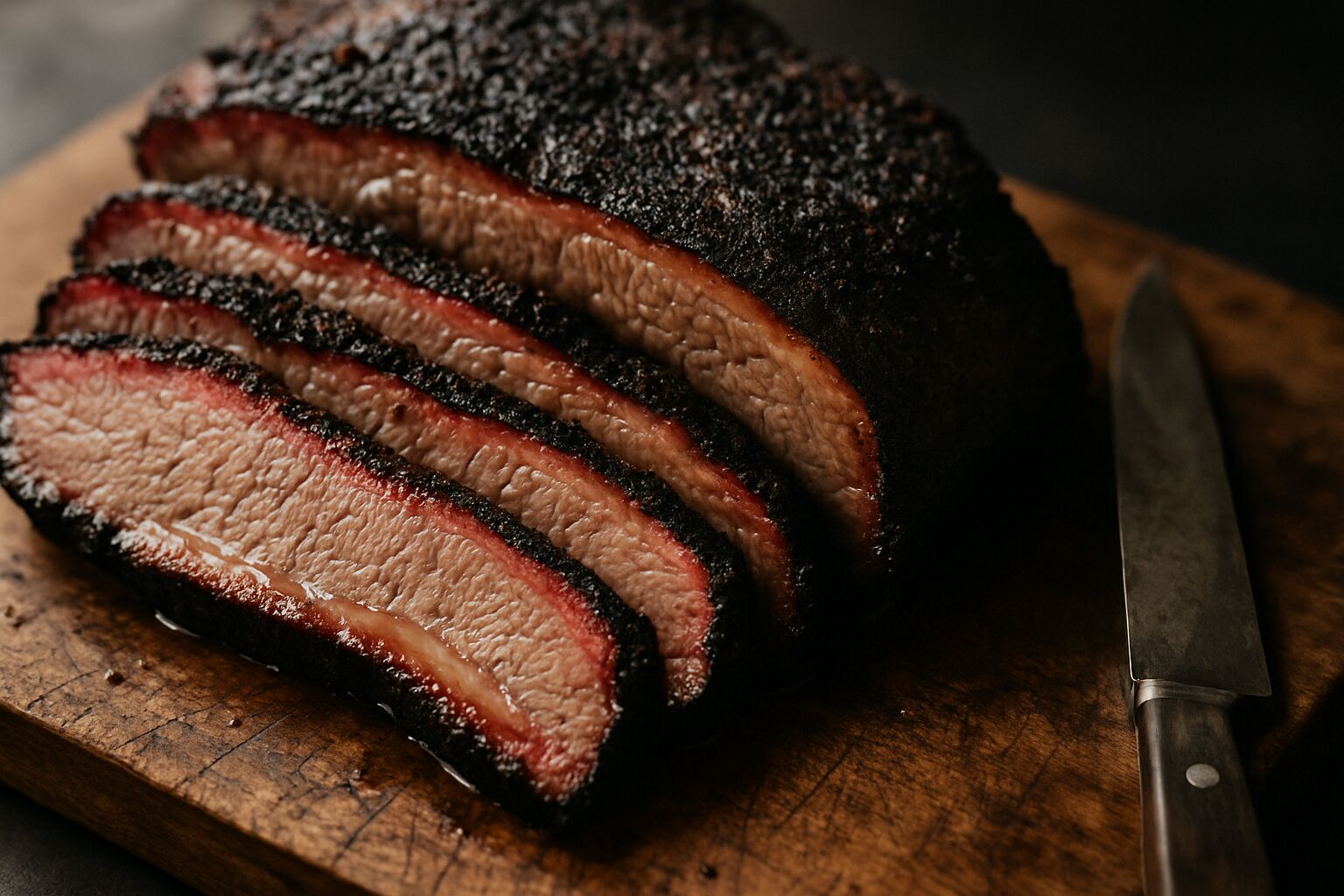
Fourteen hours. Most of it waiting.
What to do instead
Nothing, is the honest answer. If you need the meat at a certain hour, start earlier — not hotter. A brisket that finishes two hours early rests happily in a cool oven wrapped in a towel; one that is rushed never recovers.
If you must intervene, wrap it. Butcher paper keeps some bark, foil keeps none but moves fastest. Both end the stall by stopping the evaporation. You are trading crust for time, so be honest about which you wanted.
How you know it is done
Not by temperature. Around 95 °C, start probing: when the thermometer slides into the thickest part with no resistance, like into room-temperature butter, it is ready. That can be 92 °C or it can be 99. The number is a hint, the feel is the answer.
Then rest it for an hour. At least. This is the second place people rush, and slicing early costs you every drop you spent fourteen hours keeping in there.